

Events

Upcoming Events
Next Design Session
Coming Soon…
Tandem
February 4-7, 2026
Overcoming Regulatory Barriers: A Case Study of IRBand DUA Navigation in the Engraft Learning Network
Speaker: Georgia Kent (Cincinnati, USA)
Mapping Mental Health Resource Gaps in Transplant Centers: A Multi-Center Comparison of Provider Perception vs. Actual Availability in the Engraft Learning Network
Speaker: Georgia Kent (Cincinnati, USA)
Operationalizing the CIBMTR Virtual Consortium Program to Advance Collaborative Quality Improvement in Transplant and Cellular Therapy
Speaker: John Huber (Cincinnati, USA)
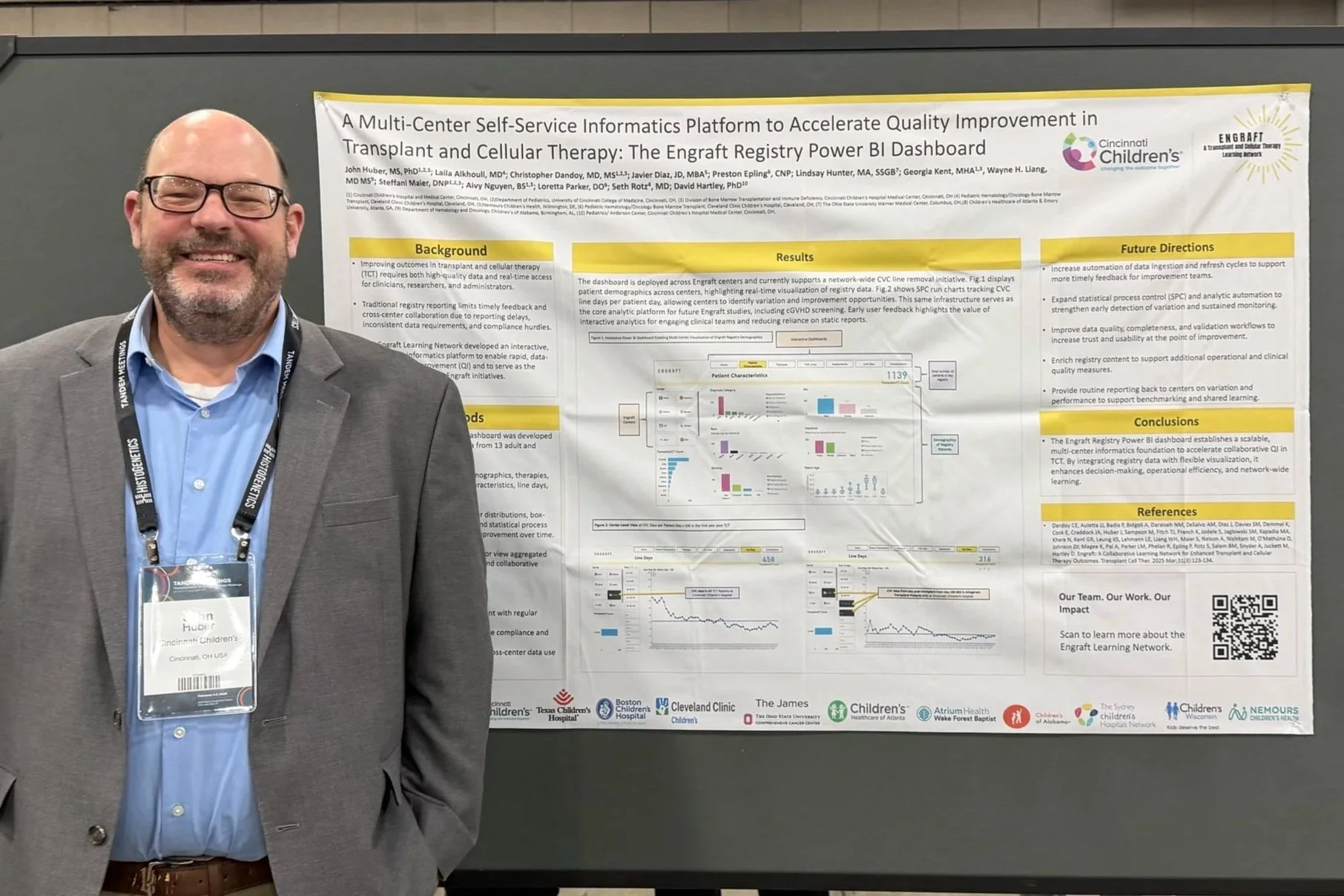
A Multi-Center Self-Service Informatics Platform to Accelerate Quality Improvement in Transplant and Cellular Therapy: The Engraft Registry Power BI Dashboard
Speaker: John Huber (Cincinnati, USA)
Quantifying the Cost and Practice Variation of Central Venous Catheter Maintenance Across the Engraft Learning Network
Speaker: Kathi Spears (Cincinnati, USA)
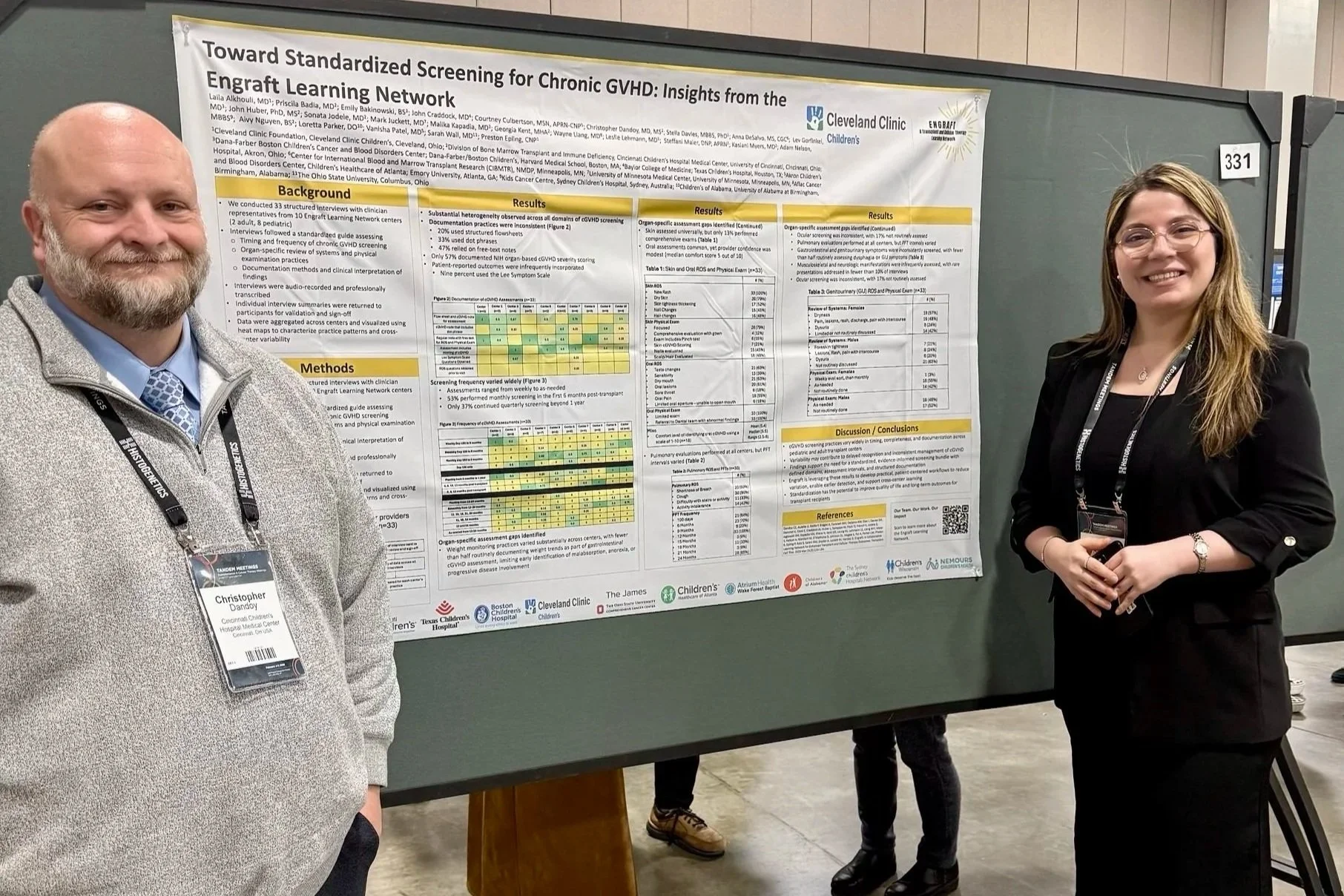
Toward Standardized Screening for Chronic GVHD: Insights from the Engraft Learning Network
Speaker: Laila Alkhouli (Cleveland, USA)
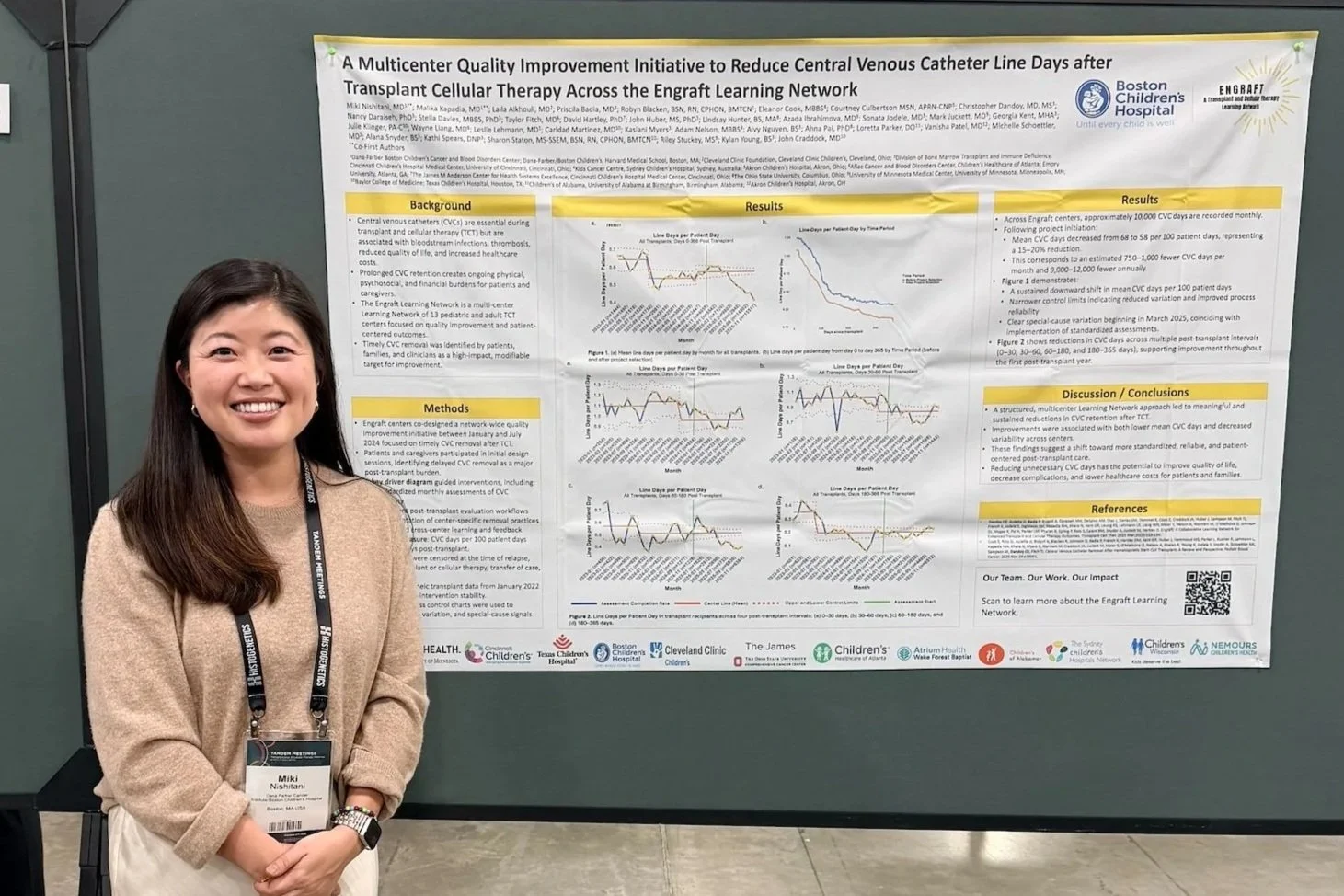
A Multicenter Quality Improvement Initiative to Reduce Central Venous Catheter Line Days after Transplant Cellular Therapy Across the Engraft Learning Network
Speaker: Miki Nishitani (Boston, USA)
The Engraft Journey Map: Co-Designing a Roadmap for Patients and Caregivers Undergoing Bone Marrow Transplant
Speaker: Pricila Badia (Cincinnati, USA)
A Day in the Life of the Engraft Learning Network: Bridging Perspectives and Driving Discovery
Speaker: Pricila Badia (Cincinnati, USA)
Activating Epic’s Flowsheet for Standardized Chronic GVHD Assessment: A Multi-Center Implementation Framework to Enable Standardized Documentation
Speaker: Steffani Maier (Cincinnati, USA)
Past Events
Previous Design Session
July 27-28, 2026
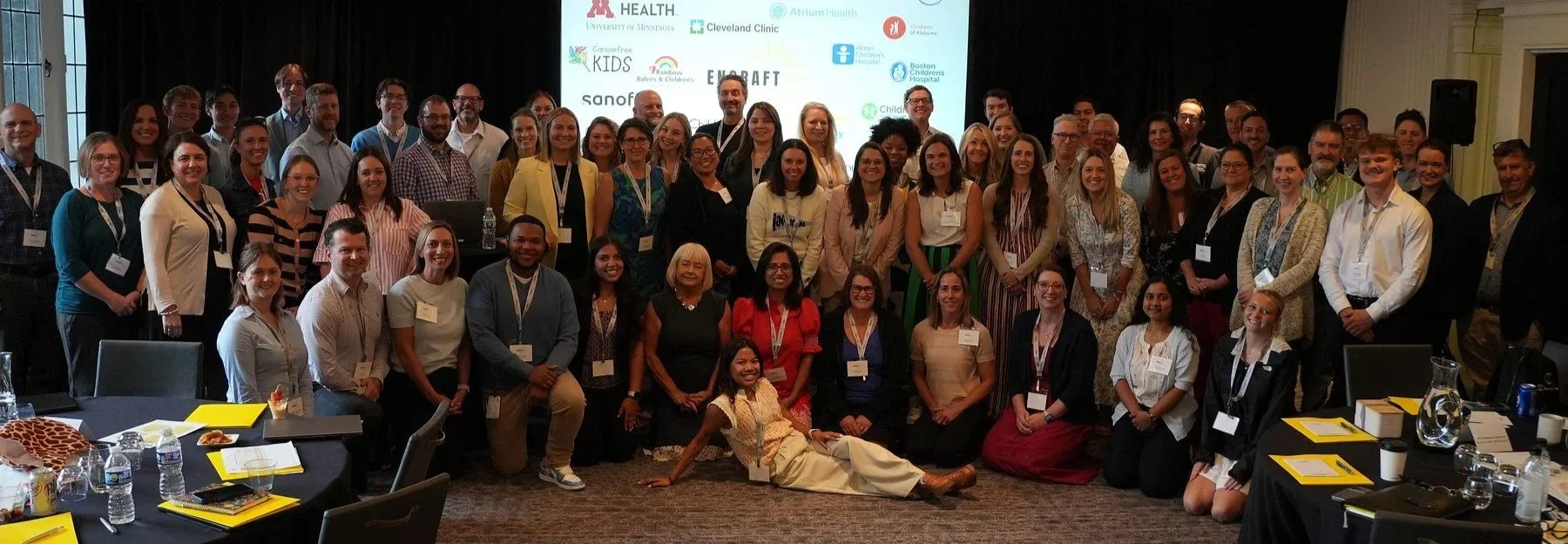
The Engraft Summer Design Session in July 2026 brought fresh momentum as teams gathered in Cincinnati to advance key network initiatives. Over two days, the group blended lived experience, clinical insight, and design focused discussion to strengthen Engraft’s work for the second half of the year.
Day one opened with updates on current projects and a grounding patient story. Much of the morning focused on cGVHD in practice, walking through how screening and follow‑up occur across centers and why standardizing workflows matters. The afternoon moved into patient and caregiver isolation, a theme that continues to surface across Engraft conversations. Teams examined how isolation shows up during and after transplant and what supports families need to stay connected and emotionally well.
Day two centered on safe CVC removal, exploring risks, readiness, and how shared decision tools support families. This connected naturally to returning to school and work, where teams discussed timing, accommodations, and clearer guidance for families. The group also explored AI and the BMT journey, discussing how emerging tools could help clarify information, identify gaps, and make care feel more seamless.
Across both days, the session reinforced Engraft’s commitment to reducing treatment‑related morbidity and mortality, improving quality of life, and strengthening the learning network through shared data, shared stories, and shared purpose.